
Brushing your nervous pet can be a challenging experience, but understanding their anxiety is the first step toward success. Many pets dislike brushing due to past negative experiences or sensitivity to touch. By employing gentle techniques and creating a calm atmosphere, you can help ease their fears. Plus, incorporating positive reinforcement can transform these sessions into something they actually look forward to. So, how can you effectively implement these strategies for a better brushing experience?
Key Takeaways
- Use a soft-bristled brush and start with hand stroking to acclimate your pet to touch before introducing the brush.
- Create a calm environment by choosing a quiet space, dimming lights, and minimizing distractions during brushing sessions.
- Incorporate positive reinforcement, offering treats and praise after each brushing stroke to build a positive association.
- Gradually introduce the brush and maintain a soothing tone to help reduce your pet’s anxiety and foster trust.
- Monitor your pet for signs of excessive anxiety or distress, and seek professional help if needed for specialized care.
Understanding the Anxiety: Why Some Pets Dislike Brushing
When you realize that brushing can be a source of anxiety for your pet, it’s important to understand why some animals dislike it so much. Many pets experience discomfort from the sensation of brushing, especially if they’ve had negative past experiences. Their skin can be sensitive, and the sound of the brush can be startling. Additionally, some pets may feel restrained during brushing sessions, triggering their instinct to flee. Understanding these factors is key to improving your approach. By using appropriate brushing techniques for nervous pets, you can help create a more positive experience. Gradually introducing the brush and associating it with rewards can foster trust and alleviate anxiety, making grooming a bonding opportunity instead of a stressful chore.
Gentle Brushing Techniques for Nervous Pets
Understanding your pet’s anxiety around brushing lays the groundwork for implementing gentle brushing techniques for nervous pets. By using these methods, you can help ease their discomfort and build trust.
- Use a soft-bristled brush: Opt for brushes designed specifically for sensitive skin to minimize irritation and promote comfort.
- Start slow: Begin by gently stroking your pet’s fur with your hand before introducing the brush, allowing them to adjust gradually.
- Incorporate positive reinforcement: Reward your pet with treats and praise during and after brushing sessions to create positive associations with the experience.
These gentle brushing techniques for nervous pets foster a sense of security and belonging, ensuring your furry friend feels safe during grooming.
Creating a Calm Environment for Brushing Sessions
Creating a calm environment is essential for successful brushing sessions, especially for nervous pets. Start by selecting a quiet, comfortable space where your pet feels safe. Dim the lights and minimize distractions, such as loud noises or sudden movements. Use soft bedding or a familiar mat to create a cozy atmosphere, making your pet more at ease. Incorporate soothing background music or white noise to mask unsettling sounds. You might also want to use calming scents, like lavender, which can help relax anxious pets. Finally, be patient and give your pet time to acclimate to the environment. By focusing on these elements, you’ll set the stage for effective brushing techniques for nervous pets, fostering trust and comfort throughout the process.
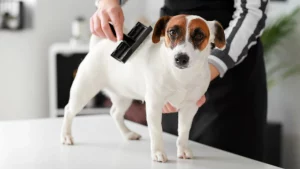
Positive Reinforcement Strategies During Brushing
To guarantee your nervous pet remains calm during brushing sessions, incorporating positive reinforcement strategies can make a significant difference. By rewarding your pet, you’ll create a more enjoyable experience for both of you. Consider these effective techniques:
- Treats: Use small, tasty treats that your pet loves, offering one after each successful brushing stroke.
- Praise: Verbally praise your pet with a soothing tone, letting them know they’re doing well.
- Playtime: End the session with a fun playtime, reinforcing that brushing leads to enjoyable outcomes.
These strategies can help build trust and make brushing a positive experience. By implementing these positive reinforcement techniques, you’re not just brushing; you’re bonding and fostering a sense of security for your nervous pet.
When to Seek Professional Help for Pet Grooming
Even with the best positive reinforcement strategies in place, there might be times when brushing sessions remain challenging for your nervous pet. If you notice your pet becoming excessively anxious, displaying signs of distress, or showing aggression, it’s important to contemplate professional help. Experienced groomers or veterinarians can provide specialized techniques and care that might be beyond your comfort level. They can also help identify any underlying health issues that could be contributing to your pet’s anxiety. Remember, seeking help doesn’t mean you’ve failed; it shows your commitment to your pet’s well-being. By recognizing when to reach out for assistance, you’re ensuring your furry friend receives the compassionate care they truly deserve.
Frequently Asked Questions
What Types of Brushes Are Best for Nervous Pets?
Soft-bristle brushes or grooming gloves work best for nervous pets. These tools minimize discomfort and help your pet feel secure. Try gradually introducing them, and you’ll create a positive brushing experience that builds trust.
How Often Should I Brush My Nervous Pet?
You should brush your nervous pet at least once a week. Regular sessions help them get used to the process, reducing anxiety over time. Keep it short and positive, making it a bonding experience for both of you.
Can Grooming Tools Cause Discomfort to My Pet?
Yes, grooming tools can cause discomfort if they’re too harsh or inappropriate for your pet’s coat type. Always choose gentle, suitable tools and monitor your pet’s reactions to guarantee a positive grooming experience.
Are There Specific Breeds More Prone to Brushing Anxiety?
Yes, certain breeds, like Chihuahuas and Shih Tzus, often show more brushing anxiety due to their sensitive nature. Understanding your pet’s temperament helps tailor brushing techniques for nervous pets, making the experience more comfortable for both of you.
How Can I Tell if My Pet Is Stressed During Brushing?
You can tell your pet’s stressed during brushing by observing their body language—like flattened ears, tense muscles, or attempts to escape. Also, watch for vocalizations or excessive panting; these signs indicate discomfort and anxiety.
Conclusion
To summarize, helping your nervous pet feel comfortable during brushing sessions takes patience and understanding. By using gentle techniques, creating a calming environment, and reinforcing positive behavior, you can transform grooming into a more enjoyable experience. Remember, if your pet’s anxiety feels overwhelming, seeking professional help is always a good option. Your dedication to their comfort and well-being will strengthen your bond and make grooming a positive part of your routine together.
You May Also Like To Read: